The Rise of Edge AI: Why Processing at the Source Matters
Artificial Intelligence has traditionally relied on powerful cloud servers to crunch data and deliver insights. But as devices become smarter and connectivity more widespread, a new paradigm is emerging: Edge AI.
What is Edge AI?
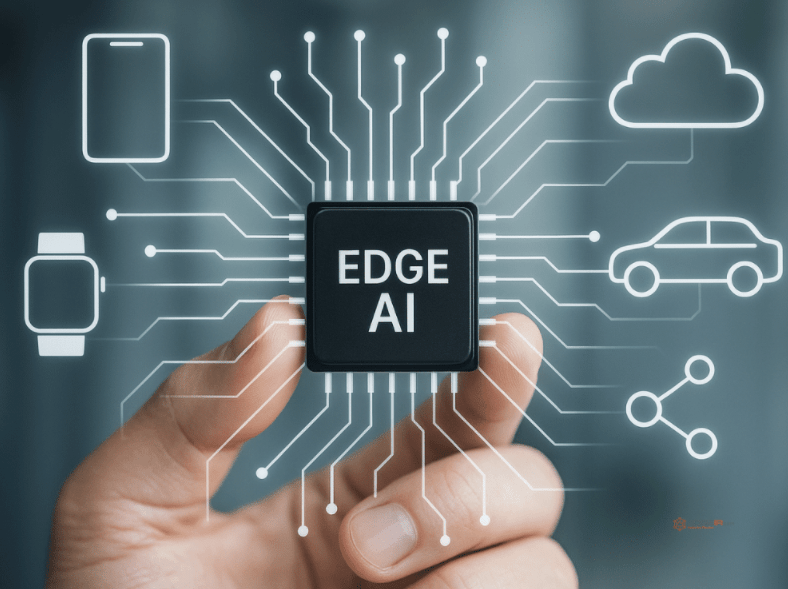
Edge AI refers to running AI algorithms directly on devices—smartphones, IoT sensors, drones, or even industrial machines—rather than sending all data to the cloud. This shift is powered by advances in hardware (like specialized AI chips) and optimized software frameworks.
Why It Matters
- Speed & Responsiveness: Real-time decisions without latency. Imagine autonomous cars reacting instantly without waiting for cloud instructions.
- Privacy & Security: Sensitive data stays on the device, reducing risks of breaches.
- Cost Efficiency: Less bandwidth usage and reduced dependency on expensive cloud infrastructure.
- Scalability: Millions of devices can run AI locally without overwhelming centralized servers.
Real-World Applications
- Healthcare: Wearables detecting irregular heartbeats instantly.
- Retail: Smart cameras analyzing customer behavior in-store.
- Agriculture: Drones monitoring crop health in real time.
- Smart Cities: Traffic lights adapting dynamically to congestion.
Challenges Ahead
Of course, Edge AI isn’t without hurdles:
- Limited processing power compared to cloud servers.
- Need for lightweight, efficient models.
- Ensuring updates and security patches reach distributed devices.
Final Thoughts
Edge AI is not replacing cloud AI—it’s complementing it. Together, they form a hybrid ecosystem where the edge handles immediate tasks, while the cloud manages deeper analytics. For businesses, embracing Edge AI means faster insights, better customer experiences, and a competitive edge in the digital race.


Leave a comment